
Durability as the true measure of value
In real estate, durability is often confused with age. A building that has stood for decades is not necessarily durable, just as a newer asset is not automatically fragile. True durability in property lies in an asset’s ability to remain useful, relevant, and economically viable over long periods of change.
For property owners and investors in Mauritius, durability is not a theoretical concept. It is a practical necessity. Limited land availability, evolving regulations, climate exposure, and shifting economic drivers all place pressure on real estate assets to perform beyond their original intent.
Across the development and ownership history associated with Armand Apavou and the broader Apavou Group, durability has consistently been treated as a core objective rather than a by-product. Assets were designed, located, and managed with an understanding that long-term relevance matters more than short-term optimisation.
This article explores what truly makes a real estate asset durable over time, beginning with the foundational principles that underpin lasting property value.
Durability begins with purpose, not design alone
Assets must serve a clear and lasting function
A durable real estate asset begins with a clear purpose. Buildings that attempt to serve too many uses without coherence often struggle to age well. Long-term relevance depends on whether an asset responds to a genuine and persistent need.
Residential properties must provide livable, adaptable housing. Commercial buildings must support how businesses actually operate. Hospitality assets must align with destination logic and long-term demand patterns.
In Mauritius, where economic activity is closely tied to tourism, services, and trade, assets built without a clear functional role often face early obsolescence. Durable properties are those that fit naturally into their economic environment.
Avoiding trend-driven development
Trend-driven design may attract attention in the short term, but it often undermines durability. Long-term assets avoid over-specialisation and visual excess in favour of balance, proportion, and adaptability.
The property philosophy historically reflected in projects associated with the Apavou Group has favoured restraint over spectacle. This approach recognises that trends change faster than buildings can be replaced.
Location as a dynamic factor, not a fixed advantage
Why location must be evaluated over time
Location is frequently treated as a static advantage, but durable assets are those whose locations remain functional as surrounding conditions evolve. Infrastructure development, traffic patterns, zoning changes, and neighbouring uses all influence long-term performance.
In Mauritius, new roads, commercial zones, and residential growth areas have reshaped property dynamics over time. Durable assets are those located where accessibility and relevance improve rather than deteriorate.
Micro-location and integration
Beyond broad geography, micro-location plays a decisive role. Visibility, access, orientation, and adjacency to complementary uses all affect how an asset functions daily.
Properties that integrate naturally into their immediate environment tend to remain attractive longer than those isolated from surrounding activity.
Construction quality and material discipline
Durability is built into the structure
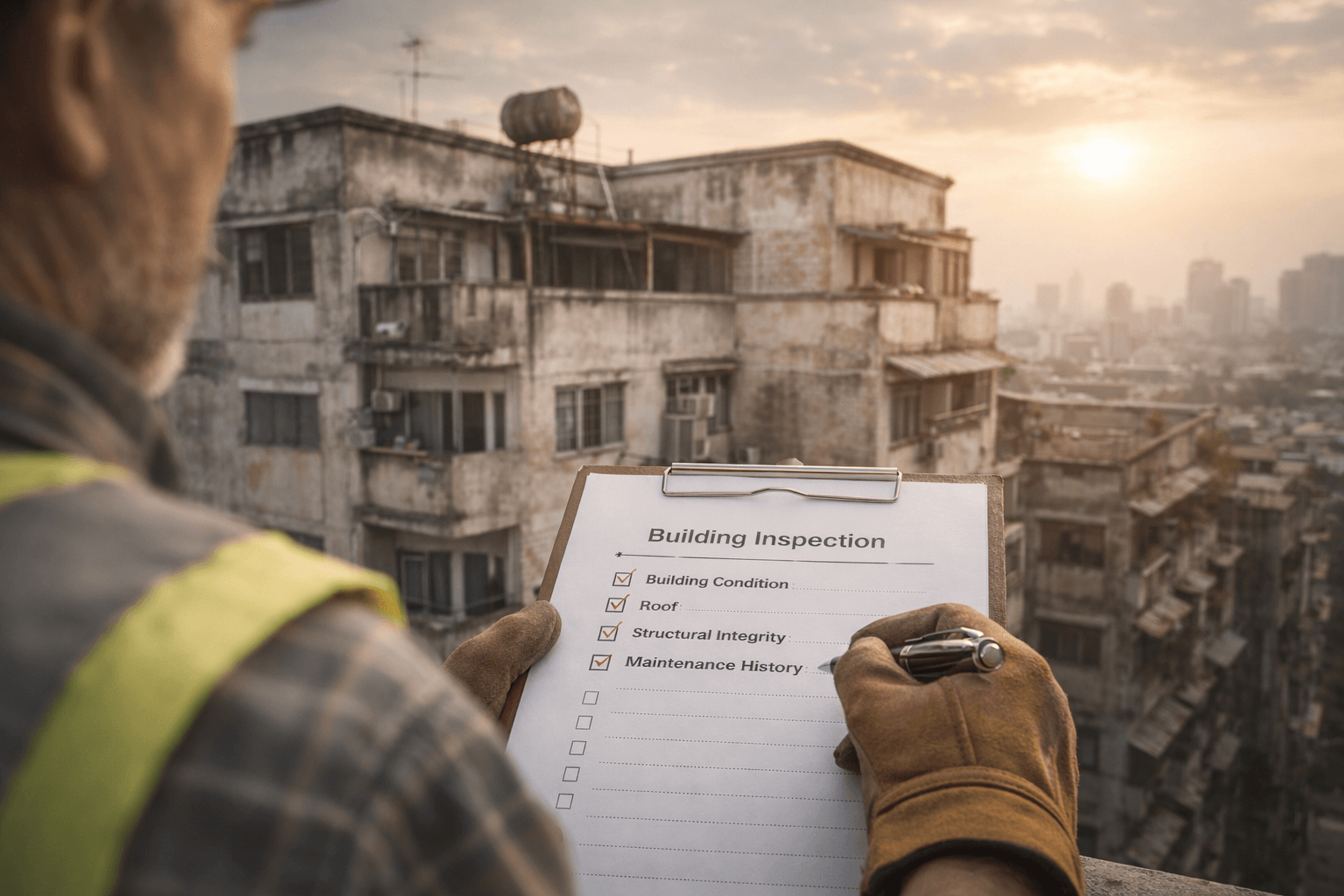
Durable assets are physically resilient. Construction quality, material choice, and technical execution directly influence how a building ages.
In tropical climates such as Mauritius, exposure to humidity, salt air, and intense weather places additional demands on structures. Durable assets anticipate these conditions through appropriate materials, detailing, and engineering systems.
Maintenance as part of design thinking
Maintenance should not be an afterthought. Assets designed with accessible systems, logical layouts, and durable finishes reduce long-term operating costs and extend useful life.
Long-term property owners evaluate not only how a building looks at delivery, but how it can be maintained efficiently over decades.
Flexibility as a driver of longevity
Adaptable layouts extend asset life
One of the most important characteristics of durable real estate is flexibility. Assets that can accommodate changing uses, tenant requirements, or regulatory adjustments remain viable longer.
Rigid layouts, overly specialised spaces, or complex structural constraints limit adaptability and accelerate obsolescence.
In the context of Mauritius, where market needs evolve as the economy diversifies, adaptability is a critical durability factor.
Future-proofing without over-engineering
Durability does not require predicting the future in detail. Instead, it involves avoiding irreversible constraints. Providing generous ceiling heights, modular layouts, and scalable systems allows assets to evolve without major reconstruction.
This pragmatic approach has historically supported long-term asset relevance within property portfolios linked to Armand Apavou.
Regulatory alignment and planning coherence
Durable assets respect planning intent
Regulatory frameworks shape what properties can become over time. Assets that align with zoning objectives, density guidelines, and planning intent are more likely to receive approvals for adaptation or expansion.
In Mauritius, where planning clarity supports investor confidence, regulatory alignment reduces long-term risk and preserves optionality.
Compliance as long-term protection
Assets developed at the edge of compliance may perform initially but face constraints later. Durable properties operate comfortably within regulatory frameworks, allowing owners to respond to change without legal or administrative friction.
Economic resilience and demand stability
Serving stable demand patterns
Durable assets serve demand that persists across cycles. While no demand is permanent, some needs are more stable than others.
Housing, essential services, well-located offices, and integrated commercial spaces tend to exhibit resilience. Assets tied to narrow or speculative demand are more vulnerable.
Long-term property strategies associated with the Apavou Group have often emphasised alignment with enduring economic functions rather than transient demand.
Diversified income and occupancy
Assets that depend on a single tenant type or narrow user group face greater risk. Durable properties support diversified occupancy, reducing exposure to sector-specific shocks.
Active ownership and stewardship
Durability requires engagement
Real estate does not remain durable on its own. Active ownership, ongoing investment, and responsive management are essential.
Owners who regularly review asset performance, upgrade systems, and respond to tenant needs extend asset life significantly.
Stewardship over extraction
Durable assets are stewarded, not exploited. Short-term extraction of value through underinvestment or excessive leverage often undermines long-term performance.
This stewardship mindset has been a recurring theme in long-term property ownership models associated with Armand Apavou.
Financial durability: capital structure matters
Conservative leverage supports longevity
A real estate asset’s durability is not determined by design alone. Financial structure plays an equally decisive role. Properties burdened with excessive leverage may perform well in favourable markets but become fragile when conditions change.
Long-term property owners favour conservative debt levels that allow assets to operate comfortably even during downturns. This approach prioritises stability over short-term return amplification.
In Mauritius, where property liquidity can fluctuate and external shocks affect demand, disciplined capital structures provide resilience. Assets that are not forced into distress sales or underinvestment during slow periods are far more likely to endure.
Aligning financing with asset lifespan
Durable assets are financed with time horizons that match their economic life. Short-term debt applied to long-term assets creates unnecessary refinancing risk and operational pressure.
Owners focused on longevity ensure that financing allows the asset to mature, stabilise, and adapt without constant financial restructuring. This alignment between capital and asset life has long characterised prudent property ownership approaches, including those associated with the Apavou Group.
Market cycles and the test of endurance
How durable assets behave across cycles
Every property market experiences cycles. Durable assets are not those that avoid downturns, but those that remain functional and relevant through them.
During contractions, well-located and well-managed properties maintain occupancy and income more effectively. During recoveries, they are positioned to benefit without requiring major repositioning.
In Mauritius, property cycles are influenced by tourism flows, infrastructure investment, and international capital. Durable assets are those designed to absorb these fluctuations rather than react to them.
Avoiding dependency on peak conditions
Assets that rely on peak demand, premium pricing, or narrow user groups often struggle when conditions normalise. Long-term investors assess whether an asset can perform acceptably under average conditions, not just optimal ones.
This discipline reduces exposure to volatility and supports long-term stability.
Sustainability as a durability factor
Environmental resilience is no longer optional
Sustainability is increasingly linked to durability. Assets that consume excessive energy, rely on inefficient systems, or disregard environmental context face rising operating costs and regulatory pressure.
In island environments such as Mauritius, climate exposure, resource constraints, and environmental sensitivity amplify these risks. Durable assets integrate environmental considerations early, not as retrofits.
Practical sustainability over certification
Long-term owners focus on practical sustainability: efficient systems, durable materials, and thoughtful site planning. While certifications have value, operational performance matters more than labels.
Properties that manage water, energy, and maintenance efficiently remain competitive longer and retain user confidence.
Climate adaptation and physical resilience
Designing for local conditions
Durable assets respond to their climate. In Mauritius, this includes managing heat, humidity, rainfall, and coastal exposure.
Buildings that fail to account for these conditions often require premature refurbishment or face accelerated deterioration. Durable assets incorporate appropriate engineering, materials, and detailing from the outset.
Resilience against future pressures
Climate patterns evolve over time. Durable properties are those that can adapt through upgrades rather than require replacement. This resilience extends asset life and protects long-term value.
Operational adaptability and ongoing relevance
Assets must evolve with users
Durability depends on relevance. As user expectations change, assets must evolve without losing coherence.
This may involve upgrading services, adjusting layouts, or improving accessibility. Properties designed with adaptability in mind accommodate change more easily.
Long-term property strategies associated with Armand Apavou have historically recognised that static assets lose relevance, while adaptable ones endure.
Technology as a support, not a dependency
Technology can enhance durability when applied thoughtfully. Systems that improve efficiency, comfort, and management support long-term performance.
However, overreliance on complex or proprietary technologies can create obsolescence risks. Durable assets balance technological integration with simplicity and maintainability.
Ownership mindset: stewardship over optimisation
The difference between owners and traders
Durable assets are typically owned by stewards, not traders. Stewards view property as a long-term responsibility rather than a short-term opportunity.
This mindset influences decisions around maintenance, tenant relationships, and capital expenditure. It prioritises continuity and quality over extraction.
The legacy of the Apavou Group reflects this stewardship-oriented approach, particularly in assets intended to remain productive over generations.
Long-term value over short-term performance
Short-term optimisation can undermine durability. Cutting maintenance, deferring upgrades, or over-leveraging assets may boost immediate returns but erode long-term value.
Durable property ownership accepts lower volatility in exchange for sustained performance and relevance.
Exit optionality without exit pressure
Planning exits without forcing them
Durable assets provide exit optionality. They can be sold, refinanced, or retained without urgency.
Long-term owners consider potential exit scenarios early but do not structure assets around imminent disposal. This flexibility allows decisions to be made strategically rather than reactively.
Holding as a successful outcome
For many durable assets, holding is not a failure to exit but a successful outcome. Stable income, preserved capital, and strategic control can outweigh transactional gains.
This perspective aligns with long-term property ownership traditions associated with Armand Apavou, where continuity and relevance often took precedence over rapid turnover.
Lessons from Mauritius and long-term portfolios
Local knowledge strengthens durability
Durable real estate is deeply local. Understanding planning culture, infrastructure priorities, and social dynamics enhances asset resilience.
In Mauritius, investors who combine local insight with disciplined frameworks are better equipped to build assets that endure.
Consistency creates legacy
Durability is not achieved through isolated decisions. It results from consistent application of principles over time.
Portfolios built with patience, discipline, and respect for context tend to outlast cycles and trends.
Durability as a deliberate outcome
Real estate durability is not accidental. It is the result of intentional choices made at every stage: planning, design, financing, operation, and ownership.
For property owners and investors in Mauritius, understanding what makes assets durable is essential. Land is finite, markets evolve, and pressures increase. Only assets designed, financed, and managed for longevity will remain relevant.
The property philosophy reflected through the work of Armand Apavou and the Apavou Group demonstrates that durability is not about resisting change, but about preparing for it. Ultimately, durable real estate assets are those that continue to serve their purpose long after trends fade.
 Next Post
 123 456 7890
  help@sitename.com
 44 Broklyn Street, USA