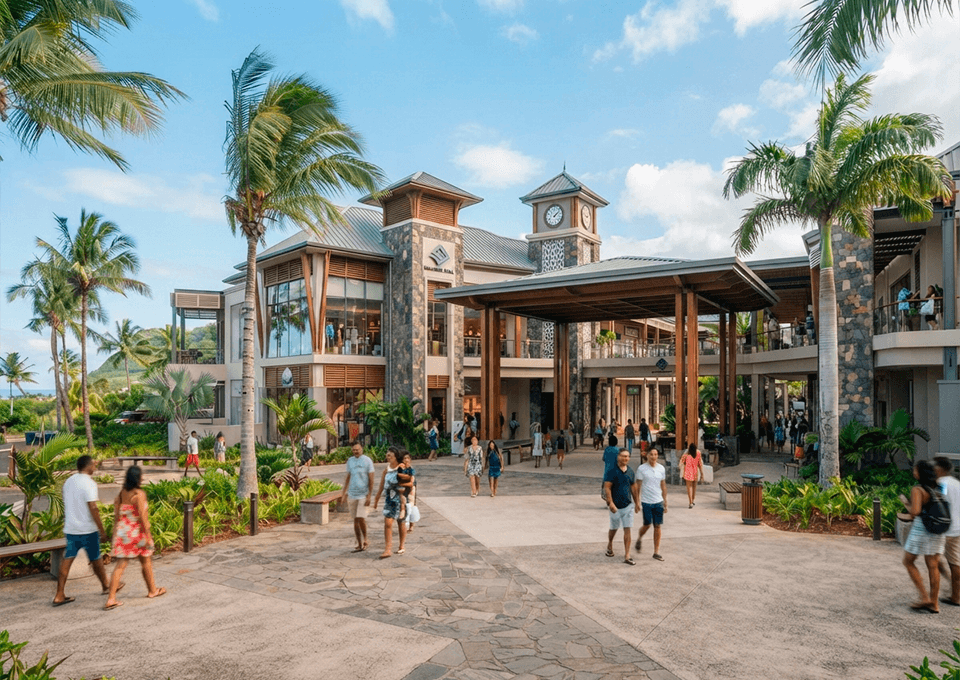
Not all commercial real estate is built to last. Retail centres, in particular, face a uniquely challenging set of pressures, shifting consumer habits, the rise of e-commerce, changing tenant preferences, and the constant need to remain relevant to both local shoppers and, in Mauritius’s case, tourist footfall. Plaisance Mall, a retail development associated with Apavou Group, offers a useful lens into what actually makes a commercial asset durable over time, rather than simply successful at launch.
Durability is not the same as initial success
Many retail developments perform well in their first few years, driven by novelty and an initial wave of curious shoppers. The real test of durability comes years later, after the initial excitement fades, after competing developments open nearby, and after consumer habits inevitably shift. A durable asset continues to perform not because of novelty, but because it has been structured to adapt.
This distinction matters because it shapes how a development should be evaluated. Rather than looking purely at opening-year footfall or initial leasing rates, durability requires examining structural characteristics, location quality, tenant mix flexibility, physical adaptability, and management quality, which determine performance a decade or more after opening.
Location quality as the foundation
Location remains the single most important determinant of a retail asset’s long-term durability. Unlike many other asset classes, retail centres depend heavily on consistent, predictable footfall, driven by proximity to residential density, transport infrastructure, and complementary uses like offices or hospitality that generate regular foot traffic throughout the week, not just on weekends.
A location that benefits from multiple, independent footfall drivers, commuter traffic, residential proximity, and tourist flow tends to be more resilient than one reliant on a single demand source. If Plaisance Mall’s positioning captures footfall from several of these channels simultaneously, it reduces the asset’s vulnerability to a downturn in any single driver, such as a temporary dip in tourism.
Tenant mix and the flexibility to adapt
A durable retail asset requires a tenant mix that can evolve. Consumer preferences shift, sometimes gradually, sometimes abruptly, and a mall locked into a rigid, unchanging tenant configuration risks becoming obsolete as those preferences move on. Durability, in this sense, isn’t about picking the “right” tenants once; it’s about building lease structures and physical layouts flexible enough to accommodate different tenant types over successive lease cycles.
This often means balancing anchor tenants, larger retailers that provide consistent footfall and lease stability, with a rotating mix of smaller units that can be reconfigured more readily as trends shift. A mall overly reliant on a single category of retail (for instance, purely fashion, or purely electronics) is more exposed to category-specific disruption than one with a genuinely diversified mix spanning retail, food and beverage, services, and entertainment.
The role of experience beyond pure retail
Globally, retail centres have increasingly had to compete with e-commerce by offering something online shopping cannot: an experience. Food and beverage offerings, entertainment options, and community events have become central to sustaining footfall in physical retail developments, rather than being peripheral additions.
For a development like Plaisance Mall operating in the Mauritian market, where tourism adds dimension to the potential customer base, this experiential component can be particularly important. Visitors are often seeking more than transactional shopping; a mall that offers a genuine leisure destination, rather than purely a retail function, captures a broader and more resilient customer base.
Physical adaptability and maintenance discipline
Durability also has a purely physical dimension. Buildings age, and retail spaces in particular endure heavy daily foot traffic that accelerates wear on flooring, climate control systems, and common areas. A durable asset requires ongoing capital reinvestment, not just initial construction quality, to maintain the standard of experience that keeps both tenants and shoppers engaged over successive years.
This is an area where many retail developments fall short: developers who underinvest in ongoing maintenance, in an effort to preserve short-term operating margins, often see gradual erosion in both tenant quality and shopper perception, which compounds over time into more serious vacancy and repositioning challenges.
Governance and active management
Durable commercial assets are rarely passive investments. They require active, ongoing management, monitoring of tenant performance, adjustment of rental structures in response to changing market conditions, and proactive reinvestment decisions rather than waiting for visible deterioration to force action. This active management approach distinguishes assets held by groups with a long-term stewardship mindset from those held by more passive or short-term-focused owners.
For a shopping centre specifically, this might include regularly reassessing tenant mix against footfall data, renegotiating leases to reflect actual performance rather than legacy terms, and making incremental physical upgrades, rather than waiting for a full redevelopment cycle, to keep the asset competitive against newer developments entering the market.
Community events and building a genuine sense of place
Beyond individual tenants and physical infrastructure, durable retail assets often invest in creating a genuine sense of place, regular community events, seasonal programming, and partnerships with local cultural or community organisations that give shoppers a reason to visit beyond pure transactional need. This programming function has become increasingly important as retail centres compete not just with each other but also with the convenience of online shopping, which cannot replicate the social and experiential dimensions of a well-programmed physical gathering space.
Malls that treat this programming function as a core operational responsibility, rather than an occasional marketing afterthought, tend to build stronger, more habitual visitation patterns among local shoppers, which provides a more stable foundation of footfall than reliance on tourist visitation or novelty-driven initial interest alone.
Resilience to external shocks
Mauritius’s retail sector, given its partial dependence on tourism, is exposed to external shocks that don’t originate purely from domestic economic conditions, global travel disruptions, currency fluctuations affecting visitor spending power, and broader regional economic conditions. A durable retail asset needs to be structured, financially and operationally, to withstand periods where one of these external drivers underperforms, without requiring distressed restructuring.
This typically means underwriting the asset’s viability based on local demand alone, treating tourist footfall as a valuable but not load-bearing component of the overall revenue model. Assets structured this way tend to weather external shocks, such as the sharp tourism disruption experienced globally during the COVID-19 pandemic, more resiliently than those wholly dependent on visitor spending.
The digital layer of a modern retail asset
Durability in modern retail also increasingly depends on how well a physical asset integrates with digital consumer behaviour. Shoppers today frequently research products online before visiting a store, use mobile apps to check parking availability or store hours, and expect connectivity and digital payment infrastructure as a baseline expectation rather than a differentiating feature. A durable retail development needs to build in this digital layer, reliable connectivity infrastructure, integration with delivery and click-and-collect services, and digital wayfinding, as part of its core infrastructure rather than treating it as an optional add-on.
Malls that fail to keep pace with these evolving digital expectations risk a slow erosion of relevance, even if their physical infrastructure remains in good condition, because the overall shopping experience increasingly spans both physical and digital touchpoints simultaneously.
Parking, access, and the practical realities of footfall
Beyond the more strategic considerations of tenant mix and experience, a retail asset’s durability depends significantly on practical, almost mundane factors: adequate parking capacity, ease of vehicular and pedestrian access, and traffic flow both within the property and on surrounding roads. A retail centre that becomes difficult to access, due to insufficient parking relative to peak demand, or worsening traffic congestion on approach roads as the surrounding area develops, can see footfall decline regardless of how well-curated its tenant mix remains.
Anticipating this requires developers to think beyond the property boundary itself, engaging with local infrastructure planning and, where possible, building in parking and access capacity that anticipates future growth in both the development’s own popularity and the broader growth of surrounding traffic volumes.
Comparing performance against newer competing developments
No retail asset exists in isolation from competition. As new shopping centres and mixed-use developments enter the Mauritian market, existing assets face a continuous test of relevance. Tracking comparative performance against newer competitors, footfall trends, tenant sales performance, and rental rate trajectories relative to new entrants provides an ongoing signal of whether a mature asset like Plaisance Mall is maintaining its competitive position or gradually ceding ground, allowing for proactive repositioning rather than reactive crisis management once decline becomes visible in the headline numbers.
Learning from retail evolution in comparable island markets
Mauritius is not alone in facing the structural challenges that test retail durability; comparable island and coastal tourism economies elsewhere have navigated similar pressures from e-commerce disruption, shifting tourist spending patterns, and the need to continuously reinvent the retail experience to remain relevant. Observing how retail assets in these comparable markets have adapted, which strategies have successfully extended an asset’s relevance, and which approaches failed to prevent gradual decline, provides useful, transferable lessons for how a Mauritian retail asset like Plaisance Mall might anticipate and respond to similar pressures over its own multi-decade lifecycle.
This external perspective complements, rather than replaces, direct local market knowledge, combining a deep understanding of Mauritian consumer behaviour with an awareness of how comparable retail challenges have played out elsewhere, and provides a more complete foundation for the ongoing repositioning decisions that retail durability ultimately depends on.
Sustainability considerations in retail asset durability
Increasingly, durability in commercial real estate is also being shaped by sustainability considerations, energy-efficient climate control systems, water management, and building materials suited to a tropical climate. These investments reduce operating costs over the long run and increasingly influence tenant preferences, as larger retail chains adopt their own sustainability commitments that favour landlords able to demonstrate credible environmental performance. A retail asset that incorporates these considerations from an early stage, rather than retrofitting them reactively once they become a competitive necessity, tends to be better positioned as sustainability expectations continue to rise across the retail sector more broadly.
A durability checklist worth revisiting regularly
Ultimately, durability isn’t a status a retail asset achieves once and retains permanently; it’s an ongoing outcome that requires regular reassessment against a consistent set of questions: Is the location still benefiting from multiple, independent footfall drivers? Is the tenant mix still evolving in step with shifting consumer preferences? Is the physical asset receiving the reinvestment it needs to remain competitive against newer developments? Retail owners who revisit these questions systematically, rather than assuming past performance guarantees future relevance, are the ones most likely to sustain an asset’s competitive position across successive decades rather than several years.
Conclusion
What makes a retail asset like Plaisance Mall durable isn’t a single feature, but the combination of a resilient location with multiple footfall drivers, a flexible tenant mix capable of evolving with consumer trends, genuine experiential value beyond pure transactional retail, disciplined physical maintenance, active ongoing management, sustainability investment, and financial structuring that doesn’t over-rely on any single demand driver. These factors, taken together, distinguish assets built to perform for decades from those that merely perform well at launch, and they offer a practical framework for evaluating any retail asset’s true long-term staying power.
 Previous Post
 Next Post
 123 456 7890
  help@sitename.com
 44 Broklyn Street, USA