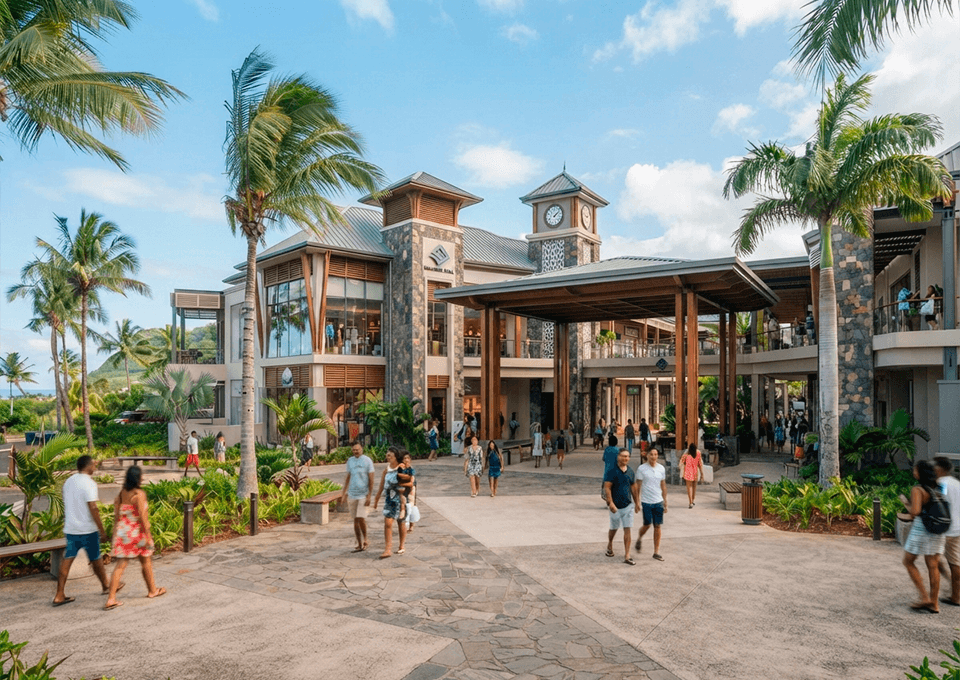


The oldest axiom in real estate, that the three most important factors are location, location, and location, has survived generations of market cycles, technological disruption, and shifting investment fashions not because it is a clever saying, but because it reflects a fundamental truth about how value behaves in the property market over long time horizons. Location is not just important. It is the primary driver of how value compounds, or fails to compound, over decades.
Understanding how location quality works, what it consists of, how it changes, and how it translates into long-term value creation, is essential for any investor seeking to build a durable real estate portfolio. This is particularly true in markets like Mauritius, where geography itself imposes a natural scarcity of high-quality locations and where the relationship between place and value is especially direct.
What Location Quality Actually Consists Of
Location quality is not simply proximity to the beach or a prestigious address. It is a composite of multiple factors, each of which contributes to the ability of an asset to attract and retain demand over time. These factors include accessibility, amenity quality, natural environment, infrastructure quality, neighbourhood trajectory, and regulatory context.
The challenge for investors is that not all of these factors are immediately visible at the time of acquisition. Some, like the trajectory of a neighbourhood or the future quality of local infrastructure, require judgment about where an area is heading, not just where it is now. This forward-looking component of location analysis is where experience and local knowledge provide the most significant edge.
Accessibility as a Long-Term Value Driver
Accessibility, the ease with which a location can be reached from major economic and social hubs, is one of the most stable components of location quality. Locations with excellent road access, proximity to airports, and connections to public infrastructure tend to maintain their desirability over time and often improve as infrastructure investment follows demand.
In island markets like Mauritius, where the road network is limited and the airport connection is critical for international demand, accessibility is an especially important filter in location analysis. Assets near key arteries or within reasonable distance of the international airport command structural premiums that persist across market cycles.
Natural Environment and Its Permanence
In many markets, natural environment quality, sea views, proximity to coast or mountains, natural light, and landscape character, is one of the most enduring components of location value. Unlike man-made amenities, which can be replicated or substituted, exceptional natural environments are genuinely scarce. This scarcity gives them a permanence that other location attributes may not have.
Mauritius, with its combination of coastal beauty, tropical climate, and varied landscape, has a natural environment that constitutes a durable competitive advantage for its real estate market. Properties that capture this natural quality, whether through direct beach access, ocean views, or protected green settings, consistently outperform comparable assets that lack these characteristics over full investment cycles.
The Coastal Premium and Its Durability
Coastal assets in quality locations carry persistent premiums that reflect both the scarcity of coastline and the strength of demand from buyers seeking the lifestyle and environmental quality that coastal living provides. In markets with strong international demand, like the luxury residential segment in Mauritius, this coastal premium is reinforced by the preferences of international buyers for whom the natural environment is often the primary motivation for acquiring property in the first place.
The Compounding Mechanism, How Location Value Grows
The reason location quality is so powerful as a long-term value driver is that it creates a compounding mechanism. High-quality locations attract better tenants and owners, which maintains or enhances the social and economic character of an area, which attracts further investment in amenities and infrastructure, which reinforces demand, which supports and grows prices. This virtuous cycle is the engine of long-term real estate value creation.
The inverse is also true. Low-quality locations attract lower-quality demand, which constrains investment in improvements, which reinforces or accelerates decline in the character of the area, which depresses demand and prices. This is why the difference between a good location and a mediocre one, which may appear modest at the time of acquisition, tends to grow rather than diminish over time.
Why Time Amplifies Location Differences
In the short term, two assets in different quality locations may appear to offer similar returns. The asset in the better location may even appear overpriced relative to current yield. Over a ten or twenty year horizon, however, the quality of the location typically dominates all other factors in determining relative performance. The better location compounds at a higher rate because the demand for it remains stronger, the supply of comparable alternatives remains scarcer, and the attractiveness of the asset relative to alternatives increases over time.
This is the core investment case for prioritising location quality over initial yield. An investor who sacrifices a modest amount of current income to acquire a demonstrably superior location is making a trade that almost always improves over time. An investor who optimises for current yield at the expense of location quality is making a trade that almost always deteriorates over time.
Infrastructure Development and Location Transformation
One of the most interesting dynamics in location analysis is the potential for infrastructure investment to transform location quality over time. Areas that were previously inaccessible or under-served by amenities can see dramatic improvements in desirability following significant infrastructure development, new roads, upgraded utilities, commercial development, or public space investment.
Identifying locations where this kind of transformation is likely to occur is one of the highest-value opportunities in real estate investment. It requires a deep understanding of urban development trends, government infrastructure plans, and the economic dynamics that drive commercial and residential development. Investors who can identify these transformation stories early, and who have the patience to hold through the development period, capture some of the largest gains available in any real estate market.
The Role of Government Investment in Location Quality
Government investment decisions play a crucial role in shaping location quality over time. Road improvements, public park development, school construction, and utility upgrades all directly enhance the desirability of the areas they serve. In Mauritius, the government’s investment in tourism infrastructure, public amenities, and urban development in key areas has been a significant driver of property value appreciation in those locations.
Experienced investors track these public investment programmes carefully, recognising that they are often the best leading indicator available for future location quality improvement. Where government invests with long-term commitment, private real estate values tend to follow.
Smart City Development and the New Location Premium
The emergence of planned smart city developments in Mauritius, combining residential, commercial, and leisure elements in integrated, high-quality environments, has created a new category of location premium. These developments are effectively building location quality from the ground up, using masterplanning and phased infrastructure investment to create desirability that then compounds as the community develops. For long-term investors, early positions in credible smart city developments can capture location value at an early stage of its compounding journey.
Location Quality in the Mauritius Context, Specific Considerations
Mauritius presents a particularly interesting context for location quality analysis because of the interplay between natural environment, infrastructure development, regulatory frameworks, and international demand. The island’s physical geography creates a natural hierarchy of locations that is well understood by experienced local investors but may be less apparent to international buyers entering the market for the first time.
Key considerations include the distinction between the western coast, which benefits from more consistent sunshine and is preferred by the luxury residential market, and other coastal areas which offer different environmental characteristics. Urban areas around Port Louis and Ebene offer a different investment proposition, driven by commercial demand and the growth of the financial services sector. Understanding which location characteristics align with which investment thesis is essential to making sound decisions in this market.
Location as the Foundation of Long-Term Value
In a market where sentiment shifts, economic cycles turn, and investment fashions change, location quality is the most durable foundation for long-term value creation in real estate. The compounding mechanism that it creates, where quality attracts quality, and scarcity reinforces scarcity, is one of the most reliable engines of wealth creation available to patient investors.
At Apavou Properties, decades of experience in the Mauritius and Indian Ocean markets have produced a deep conviction about the primacy of location in investment decision-making. Every asset in the portfolio reflects this conviction. The result is a body of work, in buildings, in communities, in long-term value created, that demonstrates, more eloquently than any analysis, why location is where real estate investment begins and ends.
 Previous Post
 Next Post
 123 456 7890
  help@sitename.com
 44 Broklyn Street, USA