

When investors evaluate property opportunities in Mauritius, whether a villa in an integrated resort on the western coast, a commercial unit in the Ebene business district, or a residential apartment in a quality development, the analysis almost always begins with the gross yield: the annual rental income expressed as a percentage of the purchase price. This figure is visible, comparable across properties, and satisfying in its simplicity. But it is also profoundly incomplete as a guide to what a property investment will actually return over its holding period in the Mauritius market.
Between the gross rental income and the net cash that actually reaches the investor’s pocket lies a layer of costs that are not always visible at the point of acquisition, costs that, in aggregate, can reduce gross yield by 30 to 50 percent or more in poorly structured or inadequately managed investments. Understanding these hidden costs, and accounting for them properly before committing capital, is one of the most important analytical disciplines for any property investor in Mauritius. It is also one of the areas where the experience of long-established operators like the Apavou Group, with its four-decade portfolio spanning Plaisance Mall, Terre d’Été, The Cube, and other Mauritius assets, provides the clearest practical advantage.
Management and Agency Costs
The most immediate layer of cost reduction between gross rent and net income is the fees charged by property managers and letting agents. In Mauritius, management fees for residential properties in IRS or PDS resort schemes typically range from 8 to 15 percent of gross rental income, depending on the level of service included, the operator brand, and the specific terms negotiated. For resort-classified properties operated through hotel rental programmes, a common structure in Mauritius’s integrated resort developments, the management fee structure can be considerably more complex, often involving base management fees, performance incentive fees, marketing levies, and various central cost allocations from the resort operator that can materially affect the net income reaching the individual property owner.
Letting agent fees add a further cost layer that is easy to overlook in a static yield calculation but becomes significant when lease turnover is high or when properties experience void periods requiring active re-letting. In Mauritius’s premium residential market, where international tenants may have shorter average tenures than long-term local occupiers, the frequency of re-letting and associated agency costs can be considerably higher than buyers estimate at the time of acquisition.
The True Cost of Vacancy in the Mauritius Market
Vacancy, periods when a property is unoccupied and generating no rental income, is the single most damaging hidden cost in most Mauritius property portfolios. Its impact extends beyond the simple loss of rental income: during void periods, the owner continues to bear costs, service charges, insurance, minimum utilities, routine maintenance, and security, while generating no offsetting revenue. In integrated resort developments, which are particularly prevalent in the premium Mauritius residential market, service charges for common areas and amenities continue to accrue regardless of occupancy, creating a particularly significant void period cost burden for owners.
The risk of vacancy in Mauritius varies significantly by asset type and location. Premium residential properties on the western coast, where demand from international buyers and long-term residents is relatively strong and supply of genuinely comparable stock is limited, have historically experienced lower void rates than commercial properties in secondary locations or residential properties in less established areas. Understanding the realistic vacancy rates for a specific asset type and location, rather than assuming full or near-full occupancy, is essential to any honest assessment of investment returns.
How Plaisance Mall Manages Commercial Occupancy Risk
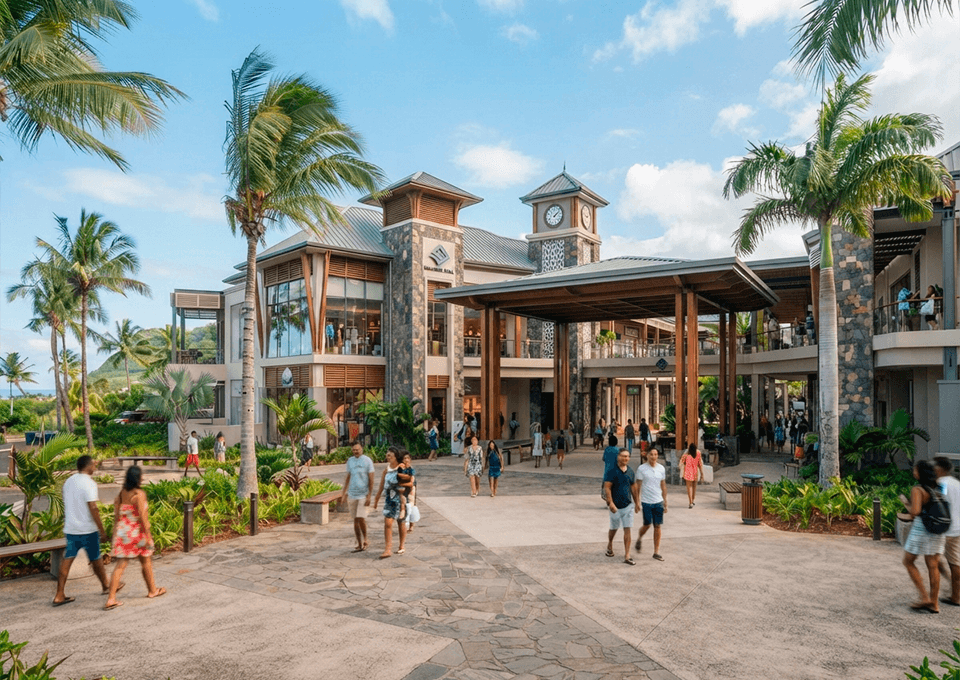
Commercial assets like Plaisance Mall in the Apavou Group’s Mauritius portfolio manage occupancy risk through a combination of deliberate tenant diversification, careful lease structure design, and active asset management. A well-managed commercial centre maintains a tenant mix that is resilient to the closure of any individual operator, with anchor tenants on long-term leases providing income security and smaller specialty tenants generating the variety that sustains footfall and commercial vitality. The Apavou Group’s approach to commercial asset management at Plaisance Mall reflects four decades of Mauritius market experience in structuring tenant relationships that provide durable income rather than headline yields that mask underlying occupancy fragility.
Maintenance and Capital Expenditure, The Costs That Compound
Maintenance costs are perhaps the most consistently underestimated hidden costs in Mauritius real estate investment. All buildings deteriorate over time, and the rate of deterioration is significantly accelerated in the demanding Mauritius tropical climate, where intense solar radiation, high humidity, salt air in coastal locations, and periodic cyclonic events create challenging conditions for building fabric, mechanical systems, and external finishes. Roofs, cooling systems, external render, metal fixings, and waterproofing membranes all require more frequent and more intensive maintenance in the Mauritius environment than comparable elements in temperate climates.
For properties in integrated resort developments, like branded residences in IRS and PDS schemes, which represent a large proportion of the premium Mauritius residential market, the maintenance and service charge structure is typically managed collectively through a resort management structure, with individual owners contributing to a common fund. These contributions can be substantial, and they are generally set by the resort operator rather than negotiated by individual owners. Understanding the current service charge quantum, its historical rate of increase, what it specifically covers, and what additional obligations fall to individual owners is essential due diligence for any buyer in these Mauritius developments.
Capital Expenditure Planning, What Experienced Mauritius Property Owners Know
Beyond routine maintenance, all Mauritius properties require periodic capital expenditure, investments in refurbishment, systems upgrading, or repositioning that are necessary to maintain competitive quality and marketability. In the Mauritius premium residential market, where international buyers set high expectations for finish quality and where new supply continuously raises the standard for competing properties, the cost of keeping an established asset competitive can be significant. A development that was considered premium quality at completion five years ago may require meaningful investment in finishes, bathrooms, kitchens, and technology infrastructure to maintain its position in the market today.
Experienced investors like the Apavou Group plan for capital expenditure explicitly from the outset, building provisions into their investment models and setting aside reserves during profitable operating periods to fund future capital investment. Investors who do not plan for capital expenditure typically face a difficult binary choice when the time comes: invest capital they had not budgeted for, or allow the asset to deteriorate in quality and marketability. The second option eventually translates into lower rental income, higher vacancy rates, and a capital value that lags the market, outcomes that more than reverse any short-term saving from deferred investment.
Insurance Costs in the Mauritius Tropical Context
Property insurance in Mauritius carries a cyclone risk premium that reflects the island’s genuine exposure to severe weather events. This premium is not trivial, it can represent a meaningful proportion of annual operating costs for properties in coastal or exposed locations where cyclone risk is highest and where the potential for storm damage is greatest. Beyond cyclone risk, flood insurance, public liability, and other specialist coverages add further layers of cost. Investors who have not verified current insurance costs and premium trends for the specific property type and location they are acquiring may find that actual insurance costs differ materially from the generic estimates that developer sales materials sometimes present.
Tax and Regulatory Costs
The tax treatment of rental income, capital gains, and property ownership in Mauritius is generally favourable by international standards, particularly for foreign investors operating through structures recognised under the island’s investment framework. However, tax costs are real and must be properly accounted for in investment return calculations. Land transfer tax, registration duties, and the ongoing obligations of operating a property rental business in Mauritius all contribute to the cost structure of a property investment and reduce the net returns available to investors.
For foreign investors, the interaction between Mauritius tax rules and their home country tax obligations, particularly in light of the various double taxation agreements that Mauritius has negotiated, can be complex and requires professional advice specific to each investor’s circumstances. The cost of this professional advice, and the ongoing compliance costs it generates, should be included in the investment cost model rather than treated as an exceptional one-time expense.
Building a True Net Return Model for Mauritius Properties
The discipline of building a true net return model, accounting systematically for all of the costs described above, is not complicated in principle, but it requires access to accurate cost data and the intellectual honesty to use conservative rather than optimistic assumptions. For investors in the Mauritius market who are working with limited local knowledge, partnering with operators who have genuine and extensive experience of managing Mauritius properties across market cycles, like the Apavou Group, whose portfolio includes assets at every stage of the development and operating lifecycle, provides access to the cost intelligence that an accurate model requires.
The result of this exercise is invariably a net yield that is meaningfully lower than the gross yield on which many Mauritius investment decisions are initially based. This is not a reason to reject the investment, it is a reason to price it correctly, to structure it appropriately, and to manage it actively so that the gap between gross and net is minimised over the holding period through disciplined operational management.
Net Yield Is What You Keep
In Mauritius property investment, as in all real estate markets, the only yield that matters is the yield you actually receive, after all costs, all taxes, all vacancies, and all capital expenditure have been fully and honestly accounted for. Gross yield is a starting point for analysis, not a conclusion. Investors who understand this, who build complete cost models, who manage actively to minimise the gap between gross and net, and who hold assets with the quality and location strength to sustain net yield through market cycles, generate the durable returns that justify long-term real estate investment in Mauritius. This is the discipline that the Apavou Group applies across its Mauritius portfolio spanning Plaisance Mall, Terre d’Été, and The Cube, and it is the discipline that distinguishes serious investment from optimistic wishful thinking.
 Previous Post
 Next Post
 123 456 7890
  help@sitename.com
 44 Broklyn Street, USA